Building a SaaS product is one of the most exciting decisions a founder can make. It is also one of the most misunderstood when it comes to cost. Most articles give you a number without context. This guide gives you the full picture so you can plan, budget, and move forward with confidence.
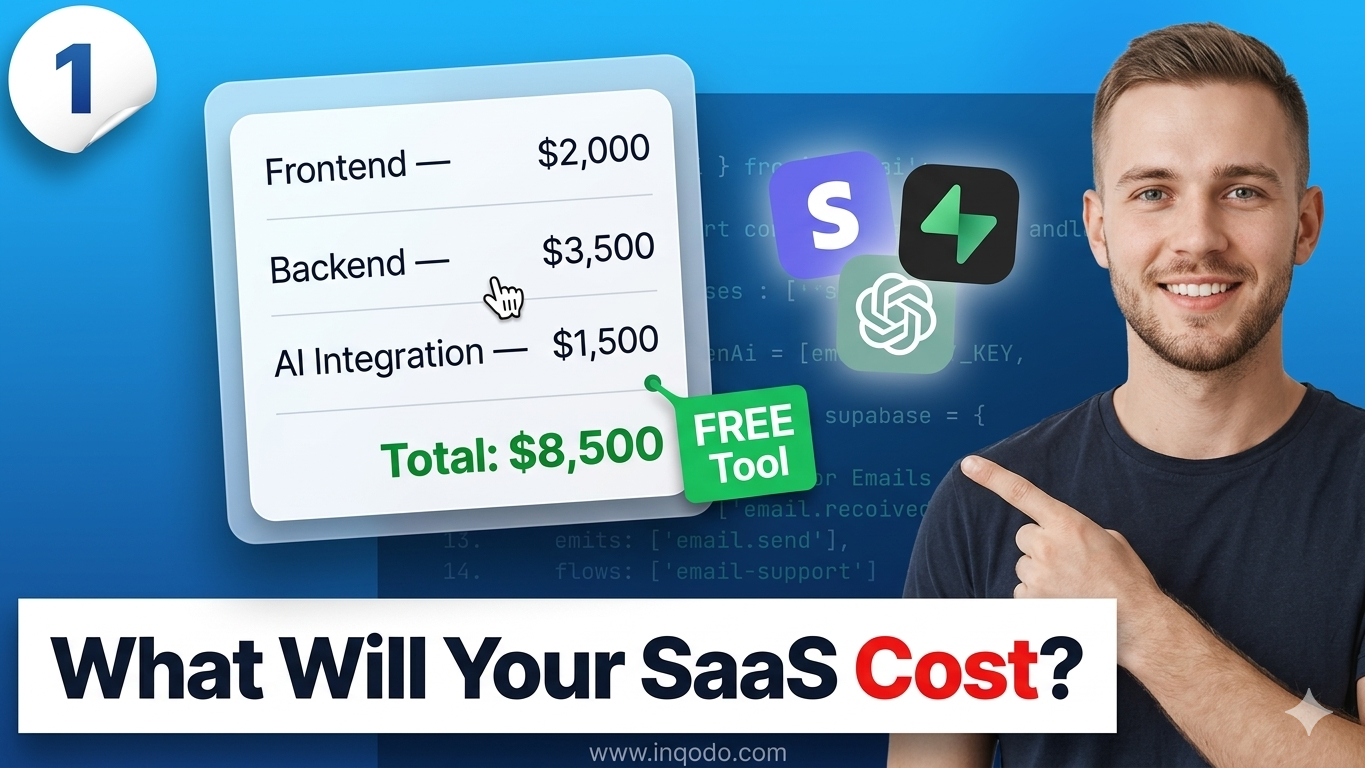
If you want a personalized estimate right now, try this free tool. It takes about 90 seconds and gives you a breakdown based on your actual product type and features.
What Actually Determines the Cost of a SaaS Product
There is no single answer to “how much does a SaaS cost to build?” because the cost is shaped by several factors unique to your product. Here are the main ones:
1. Type of Product
A simple internal tool for one team costs far less than a multi-tenant B2B platform serving thousands of companies. The most common SaaS types and their complexity levels:
– Simple utility apps (invoice generators, link shorteners, form builders): Low complexity
– B2C subscription apps (fitness tracking, journaling, productivity tools): Medium complexity
– B2B platforms (CRM, project management, analytics dashboards): High complexity
– AI-powered tools (writing assistants, data processing, recommendation engines): High to very high complexity
2. Features You Include at Launch
Every feature adds to both build time and ongoing infrastructure cost. The most common features that drive up cost are:
– User authentication and access control
– Real-time functionality (live updates, notifications, collaboration)
– Payment and billing integration (Stripe, subscriptions, invoicing)
– AI or machine learning features
– File uploads and media storage
– Multi-tenancy (separate workspaces per customer)
– Analytics and reporting dashboards
– Admin panels and internal tooling
The key insight here: most founders try to launch with too many features. A focused MVP with two or three core features will always be faster and cheaper to validate.
3. Who Builds It
This is often the biggest variable. Your options in 2025:
– Freelancers: $30 to $150 per hour depending on location and specialization. Good for specific tasks but risky for full product ownership.
– Offshore agencies: $15 to $60 per hour. Lower cost, but communication overhead and quality vary widely.
– Mid-market product studios: $80 to $200 per hour. More reliable for end-to-end delivery.
– Senior specialists: $120 to $250 per hour. High quality, but expensive and hard to find.
– Full product teams (like Inqodo): Fixed scopes or retainers. Predictable cost, faster delivery, built-in product thinking.
4. Tech Stack Choices
Some stacks cost more to build on, more to maintain, or more to scale. In 2025, the most cost-efficient stacks for SaaS are:
– Frontend: Next.js or React
– Backend: Node.js, Supabase, or serverless functions
– Database: PostgreSQL (via Supabase or Neon), or PlanetScale
– Auth: Clerk or Supabase Auth
– Payments: Stripe
– Hosting: Vercel, Railway, or Render
Choosing a well-supported, widely used stack means faster development, easier hiring, and lower long-term maintenance costs.
Typical Build Cost Ranges in 2025
Here are realistic ranges based on product type. These are build costs only and do not include ongoing monthly infrastructure.
| Product Type | MVP Build Cost | Full V1 Build Cost |
| Simple utility tool | $3,000 to $8,000 | $8,000 to $20,000 |
| B2C subscription app | $8,000 to $20,000 | $20,000 to $50,000 |
| B2B SaaS platform | $15,000 to $40,000 | $40,000 to $120,000 |
| AI-powered SaaS | $20,000 to $60,000 | $60,000 to $200,000+ |
These are professional team rates. If you are building solo or with co-founders who are developers, your out-of-pocket cost can be much lower, but your time cost is real.
Monthly Infrastructure Costs After Launch
Build cost is a one-time payment. Infrastructure is what you pay every month to keep your product running. Here is what to expect:
Early Stage (0 to 500 users)
– Hosting: $0 to $50/month (Vercel free tier, Railway starter plans)
– Database: $0 to $25/month (Supabase free tier, then Pro at $25)
– Auth: $0 to $25/month (Clerk free up to 10,000 MAU)
– Email: $0 to $20/month (Resend, SendGrid free tiers)
– AI API costs: $10 to $100/month depending on usage
– Monitoring and error tracking: $0 to $20/month (Sentry, LogRocket free tiers)
Total: roughly $0 to $240/month at early stage
Growth Stage (500 to 5,000 users)
– Hosting: $20 to $100/month
– Database: $25 to $100/month
– Auth: $25 to $100/month
– Email: $20 to $80/month
– AI API costs: $100 to $500/month
– CDN and media storage: $10 to $50/month
Total: roughly $200 to $930/month
At scale, infrastructure typically lands between 10% and 20% of your monthly revenue if you have healthy unit economics.
How to Reduce Your Build Cost Without Cutting Corners
Start With a Focused MVP
List every feature you want. Then cut it in half. Then cut it in half again. Build only what is required for a paying customer to get value from your product. Everything else is a distraction until you have revenue.
Use Managed Services
Do not build your own authentication, payment processing, email system, or file storage. Use Clerk, Stripe, Resend, and Cloudflare R2. These tools handle complexity that would take weeks to build and months to maintain.
Choose the Right Build Partner
The cheapest option is rarely the cheapest in the end. A team that understands product strategy, not just code, will save you from building the wrong things. Ask any agency or freelancer: “What would you cut from my spec to get to market faster?” If they do not have an answer, walk away.
Build for Validation First
Your first version does not need to be perfect. It needs to prove that someone will pay for your solution. Build for speed of learning, not for scale.
Common Mistakes That Inflate SaaS Build Costs
Over-engineering the architecture: Most early SaaS products do not need microservices, Kubernetes, or a custom auth system. A monolith on Vercel with Supabase will handle your first 10,000 users without issues.
Skipping design: Poor UX leads to high churn. Spending $2,000 to $5,000 on a strong design system upfront will save far more in customer support and re-engineering later.
No technical co-founder or oversight: If you are non-technical and hiring a team, you need someone (an advisor, a fractional CTO, or a product studio with strong communication) to ensure quality and catch scope creep.
Changing requirements mid-build: Scope changes are the single biggest driver of blown budgets. Lock your MVP scope before writing a line of code. Change requests after that should be treated as a new phase.
Use the Inqodo SaaS Cost Calculator
The ranges above are useful starting points, but your product is unique. The https://inqodo.com/tools/saas-cost-calculator gives you a personalized estimate based on:
– Your product type (B2C app, B2B platform, AI tool, or internal tool)
– The specific features you want at launch
– Your expected user base
It runs in about 90 seconds and gives you build cost, monthly infrastructure cost, and a recommended tech stack. No email required to see your estimate.
Frequently Asked Questions
Can I build a SaaS for under $10,000?
Yes, if you are building a focused MVP with a small feature set and using modern managed services. A simple B2C utility tool or a niche B2B tool with one or two core features is achievable at this budget with the right team.
How long does it take to build a SaaS MVP?
Typically 6 to 16 weeks for a focused MVP, depending on complexity. Products with real-time features, AI integration, or complex billing logic take longer.
Should I hire a freelancer or an agency?
Freelancers are good for specific, well-defined tasks. For a full product build, an experienced product studio gives you better accountability, faster delivery, and lower risk of the project stalling.
What is the ongoing cost once my SaaS is live?
At the early stage, expect $0 to $250/month in infrastructure. As you grow, budget 10% to 20% of your monthly revenue for infrastructure and maintenance.
Does Inqodo build SaaS products?
Yes. Inqodo is a product studio that builds SaaS products for founders and companies. If you want to talk through your idea, https://inqodo.com/consultation).